
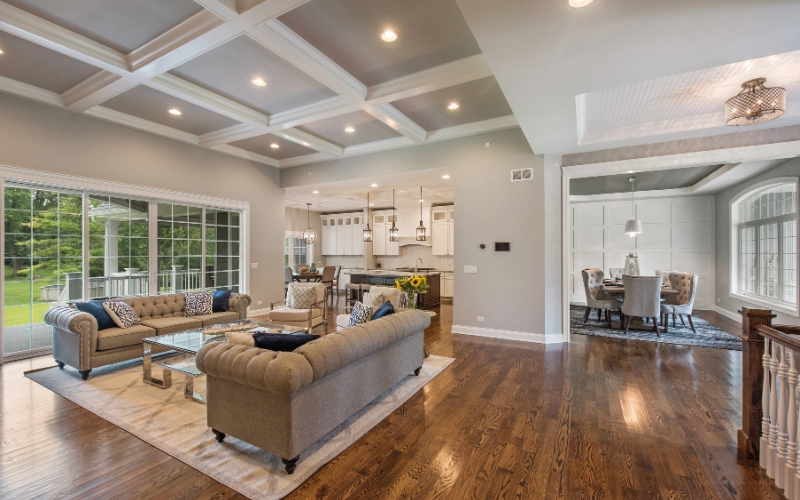
If you’ve lived in Greater Victoria through even one winter, you already know the drill: rain that doesn’t quit for days, humidity that clings to everything, and a steady parade of wet boots, dripping umbrellas, and muddy paws crossing your threshold. For most of your home, that’s just an inconvenience. For your hardwood floors, it’s a real threat.
Hardwood is one of the most beautiful, and most sensitive, flooring investments you can make. Wood is a natural, porous material, which means it responds to moisture whether you want it to or not. Over a wet Victoria winter, that response can show up as swelling, cupping, discoloration, or a finish that dulls and wears out far faster than it should.
The good news: none of this is inevitable. With the right habits and a little seasonal prep, your hardwood floors can look showroom-fresh well into spring, and for years to come. At Floors2Go, we’ve installed and maintained hardwood across Greater Victoria for years, and we’ve seen firsthand what wet-season neglect does to wood floors, along with what a few smart precautions can prevent. This guide walks you through exactly how to protect your investment, season by season, room by room.
Why Victoria’s Winter Climate Is Uniquely Hard on Hardwood
Before we get into solutions, it helps to understand the specific challenges our region presents. Victoria’s winters aren’t the coldest in Canada, but they are among the wettest and most humid, and that combination is particularly tough on solid and engineered wood flooring.
Sustained high humidity. Greater Victoria regularly sees relative humidity levels well above 80% during the winter months. Wood is hygroscopic, meaning it absorbs moisture from the air around it. When humidity stays elevated for weeks at a time, not just after a single rainy day but continuously through November, December, and January, your floorboards are slowly absorbing that moisture, causing them to expand.
Near-daily precipitation. Unlike a climate with occasional heavy storms, Victoria winters bring frequent, prolonged rain. That means more days where wet shoes, boots, and pet paws are tracking moisture directly onto your floors, and fewer dry stretches for everything to fully evaporate and reset.
Indoor heating creates a humidity see-saw. As temperatures drop, most Victoria homeowners run their heating systems more consistently. Heated indoor air holds moisture differently than the damp outdoor air, and the constant push-pull between a humid exterior and a warmer, drier interior causes wood to expand and contract repeatedly. This cycle of swelling and shrinking, repeated day after day, is one of the leading causes of long-term hardwood damage, even more so than any single spill or flood event.
Older, character homes with less-than-perfect vapor barriers. Many homes in neighbourhoods like Fairfield, Oak Bay, and James Bay are older builds where moisture can creep in through crawl spaces, foundations, or aging windows. Without modern vapor barriers, ambient humidity can seep upward into subfloors, affecting hardwood from below as well as above.
Put simply, it’s not one dramatic event that damages most hardwood floors in Victoria. It’s the slow, cumulative effect of humidity, moisture cycling, and everyday wet-weather living. That’s exactly why a proactive maintenance routine matters so much here, arguably more than in drier Canadian climates.
The Warning Signs: How to Spot Moisture Damage Early
Catching moisture-related issues early is the difference between a quick fix and a full floor replacement. Here’s what to watch for as the wet season sets in.
Cupping. This is the most common winter symptom, and it’s usually the first sign of trouble. Cupping happens when the edges of individual floorboards rise slightly higher than the centers, creating a subtle “U” shape you can feel underfoot or see when light hits the floor at an angle. It typically means the underside of the board, or the subfloor beneath it, is absorbing more moisture than the top surface, causing uneven expansion.
Crowning. The opposite of cupping, where the center of each board rises higher than the edges. This is often seen after cupped floors dry out too quickly, particularly if a professional sanded down cupped boards before they had fully stabilized. It’s a good reminder that moisture repairs shouldn’t be rushed.
Gapping. As humidity drops in spring and summer, wood naturally contracts, and small gaps can appear between boards. Some seasonal gapping is completely normal in solid hardwood and will often close back up as humidity rises again. Persistent or worsening gaps, however, can indicate the wood has lost moisture unevenly or that the subfloor has shifted.
Discoloration and dark staining. Dark blotches, especially near exterior doors, windows, or areas where plants or wet mats sit, are often a sign that moisture has penetrated the finish and reached the wood fibers underneath. Left unaddressed, this can lead to mold growth or permanent staining that requires sanding and refinishing to correct.
Soft or spongy spots. If a section of your floor feels soft, slightly bouncy, or different underfoot compared to the rest of the room, that’s a strong indicator that moisture has compromised the subfloor, not just the surface boards. This is a sign to call a professional sooner rather than later.
Finish dulling or whitening (blushing). A cloudy, whitish haze on the surface of the finish, sometimes called “blushing,” can occur when moisture gets trapped under the protective topcoat. It’s largely a cosmetic issue at first, but it signals that your floor’s protective barrier is being challenged more than it should be.
If you notice any of these signs developing, it’s worth having a flooring professional take a look before the problem progresses. Minor cupping, caught early and paired with corrected humidity control, often resolves itself. Left through an entire wet season, though, it can become permanent and require sanding, board replacement, or a full refinish. The team at Floors2Go inspects and assesses issues like these regularly across Greater Victoria homes, so if something looks off, it’s always worth a second opinion.
Your Room-by-Room Winter Defense Plan
The Entryway: Your First and Best Line of Defense
If there’s one place to focus your winter hardwood strategy, it’s the entryway. This is where the vast majority of moisture enters your home, and a little intention here prevents most downstream problems.
- Use a two-mat system. Place a rugged, absorbent outdoor mat right outside the door to scrape off the bulk of mud and water, and a second, plush indoor mat just inside to catch what’s left on shoes before anyone steps onto hardwood.
- Choose mats with non-slip, non-staining backing. Some rubber-backed mats can trap moisture against the wood and even discolor the finish over time. Look for mats rated safe for hardwood floors, and lift them regularly to let the floor underneath breathe and dry.
- Establish a “shoes off” zone. This is one of the single most effective habits for protecting hardwood in a wet climate. Wet, grit-covered soles are a double threat: moisture and abrasive debris that can scratch finishes and grind into seams.
- Keep a boot tray and umbrella stand nearby. Give wet gear a designated spot off the floor, ideally on a tray with a slight lip so runoff doesn’t spread.
Kitchens and Bathrooms: Manage the Everyday Moisture
These rooms already deal with moisture year-round, but winter humidity compounds the risk.
- Wipe up spills immediately rather than letting them air-dry, especially in front of sinks and dishwashers.
- Use a rug in front of the sink, and again, lift it periodically to let the floor dry underneath.
- Run the exhaust fan during and after showers or cooking to reduce ambient humidity that can settle onto nearby hardwood in open-concept homes.
- Check under appliances like dishwashers and refrigerators periodically for slow leaks, which are easy to miss until they’ve caused real damage.
Living Rooms and Bedrooms: Protect Against Everyday Wear
- Use furniture pads under table and chair legs, and check them periodically, since pads can compress and lose effectiveness over time.
- Rearrange rugs and furniture occasionally so the same boards aren’t always covered, allowing even light exposure and preventing uneven humidity absorption under permanently shaded areas.
- Keep pet nails trimmed, a small habit that meaningfully reduces the fine scratching that becomes more visible once winter grit and moisture dull a finish.
Humidity Control: The Single Most Important Winter Habit
If you take away only one piece of advice from this guide, let it be this: controlling indoor humidity does more for your hardwood floors than any cleaning product or mat ever will.
Wood flooring manufacturers generally recommend maintaining indoor relative humidity between 35% and 55% year-round for optimal hardwood performance. In a Victoria winter, staying within that range takes a little active management.
Use a hygrometer. These inexpensive devices measure indoor humidity and take the guesswork out of the equation. Place one in a room with hardwood flooring, away from direct sources of heat or moisture, and check it periodically through the winter.
Run a dehumidifier in problem areas. If your hygrometer regularly reads above 55%, a dehumidifier, even a modest, single-room unit, can make a significant difference, particularly in below-grade spaces, rooms with poor ventilation, or homes with older construction.
Keep your HVAC system running consistently. Rather than letting your home’s temperature and humidity swing widely, a steady, moderate heat level helps keep moisture levels more stable, which reduces the expansion-and-contraction cycling that stresses hardwood over time.
Ventilate strategically. On drier winter days, briefly opening windows to exchange stale, humid indoor air can help, but during Victoria’s heaviest rain stretches, it’s usually better to keep windows closed and rely on mechanical ventilation and dehumidification instead.
Watch crawl spaces and basements. If your home has an unfinished crawl space or basement beneath hardwood-floored rooms, make sure it has adequate ventilation or a vapor barrier. Moisture rising from below is one of the most overlooked causes of winter cupping, since homeowners tend to focus on the visible top surface and forget the equally important underside.
Cleaning Hardwood Floors the Right Way in Winter
How you clean matters just as much as how often. Wet-season grime tends to be grittier and more abrasive, but that doesn’t mean reaching for more water or harsher products.
Sweep or dry-dust daily in high-traffic zones. Winter grit, sand, salt residue, and small stones act like sandpaper under foot traffic. A quick daily sweep in entryways and hallways prevents that grit from grinding into the finish.
Vacuum weekly with a hardwood-safe attachment. A vacuum with a soft-bristle or hard-floor setting (never a beater bar, which can scratch the finish) reaches into corners and along baseboards that sweeping alone can miss.
Damp-mop, never wet-mop. This is one of the most common mistakes homeowners make in winter, when floors already feel perpetually damp from outside conditions. Use a well-wrung microfiber mop that’s barely damp to the touch, never a saturated mop, and never standing water. Excess water is one of the fastest ways to force moisture into seams and cause long-term swelling.
Choose a pH-neutral, hardwood-specific cleaner. Avoid vinegar-based solutions, ammonia, and generic all-purpose cleaners, all of which can strip or dull a wood floor’s protective finish over time. A dedicated hardwood cleaner is formulated to clean without leaving behind residue or breaking down the topcoat.
Dry as you go. After damp-mopping, use a dry microfiber cloth or towel to go over the floor immediately, rather than letting it air dry. This small extra step meaningfully reduces the time moisture sits on the surface.
Address spills the moment you see them. Whether it’s a dripped umbrella, a spilled drink, or tracked-in rain, the rule is simple: wipe now, not later. Standing liquid is far more damaging to hardwood than almost any other single factor.
When to Call a Professional
Good habits handle most of what a Victoria winter throws at your hardwood floors, but some situations call for expert attention:
- Visible cupping, crowning, or gapping that doesn’t resolve as seasons change
- Soft, spongy, or uneven spots underfoot, which may indicate subfloor damage
- Persistent discoloration or dark staining, particularly if it seems to be spreading
- A finish that feels sticky, hazy, or worn through in high-traffic areas
- Any sign of an active leak near hardwood, from appliances, plumbing, or roofing
- Floors that are due for refinishing, since a proactive refinish before a wet winter sets in can add a protective buffer that makes the whole season easier to manage
A professional assessment can tell you whether an issue is purely cosmetic and self-correcting, or whether it points to a deeper moisture problem that needs to be addressed before it spreads. Catching subfloor moisture issues early, for example, can be the difference between a localized repair and a full floor replacement. This is exactly the kind of assessment our team at Floors2Go provides for homeowners across Greater Victoria, often as part of a simple, no-obligation consultation.
Already Dealing with Damage? Here’s What to Consider
If this winter has already left its mark on your hardwood, whether that’s cupping near an entryway, staining by a window, or a section that’s simply seen better days, you have more options than a full floor replacement.
In many cases, damaged sections can be sanded and refinished, restoring the original beauty without tearing out the whole floor. In situations with more significant subfloor moisture issues, it may be worth exploring waterproof flooring systems in the most moisture-prone areas of your home, such as entryways, mudrooms, and bathrooms, while keeping traditional hardwood in the rooms less exposed to Victoria’s wet-weather traffic. This hybrid approach gives you the timeless look of hardwood where it makes sense, and peace of mind where moisture exposure is highest. It’s an approach the Floors2Go team regularly recommends and installs for homeowners looking to balance style with durability.
Set Your Floors Up for a Dry, Beautiful Spring
Victoria’s wet winters aren’t going anywhere, but hardwood damage doesn’t have to be a given. With a solid entryway strategy, consistent humidity control, and the right cleaning routine, your floors can make it through the rainy season looking every bit as good as the day they were installed, and be ready to shine again once spring arrives.
If you’re noticing early signs of moisture damage, want a professional opinion on your floor’s condition, or are considering a refinish or a switch to more moisture-resistant flooring in high-traffic areas, Floors2Go is here to help. As Greater Victoria’s trusted, locally owned flooring experts, we understand exactly what this climate does to hardwood, and exactly how to protect it.
Ready to talk floors? Book your no-obligation consultation with Floors2Go today, or bring our mobile showroom right to your door to explore moisture-resistant flooring options in person. Let’s make sure your floors are ready for whatever this Victoria winter brings.